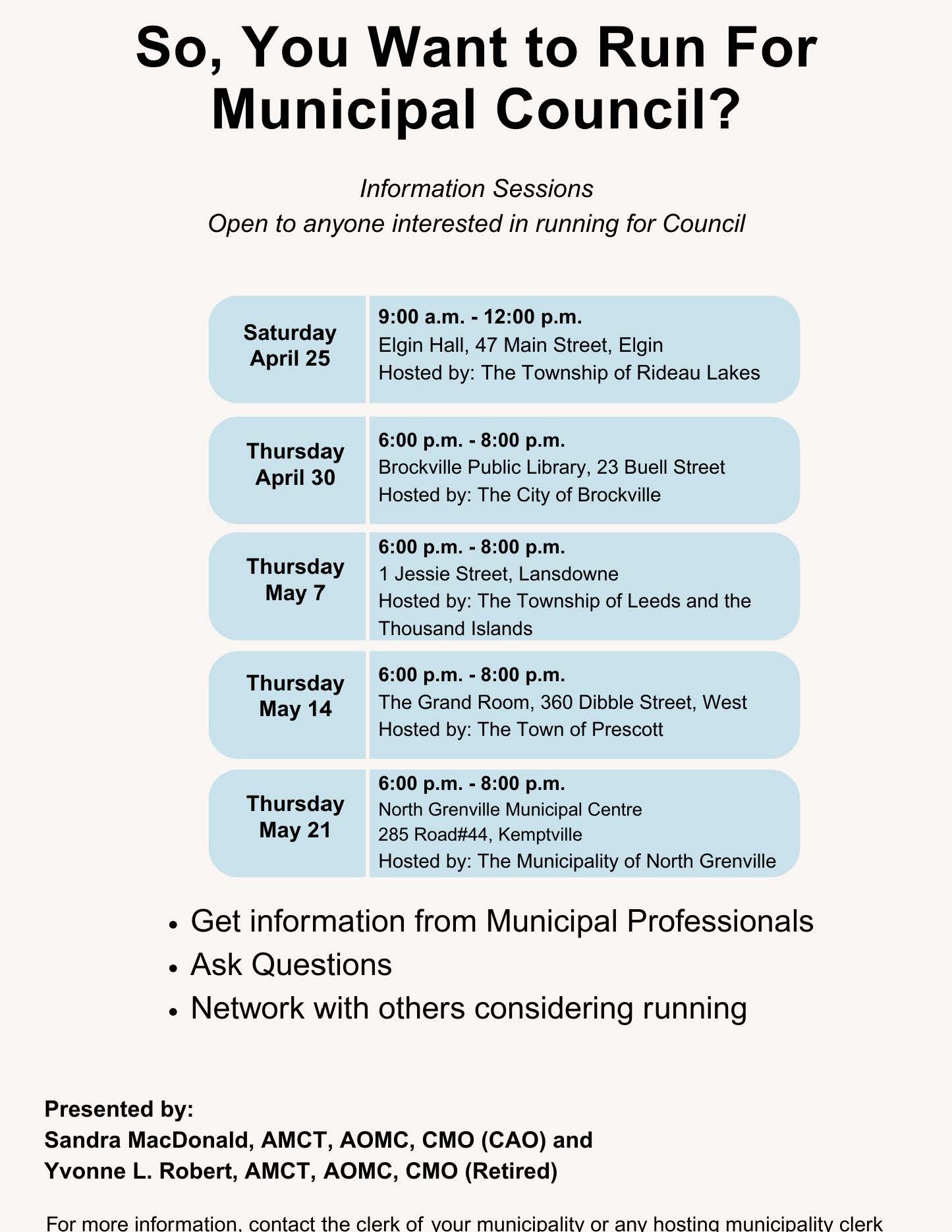

Municipal Candidates
An individual can become a candidate by filing the following information with the Returning Officer, beginning May 1, 2026 during regular business hours and before Nomination Day of August 21, 2026 at 2:00 pm. Scheduling an appointment in advance to submit nomination materials is highly recommended to ensure staff availability.
- Form 1: The prescribed Nomination Paper form
- Form 2: The prescribed declaration by at least 25 persons endorsing the nomination who are eligible to vote
- Form EL14 - Candidate Proper Use of Voters' List
- Form EL18A - Declaration of Qualifications
- Form EL52: A completed Consent to Release Personal Information
- The prescribed nomination filing fee of $100 for the office of Councillor
Candidate's Guide
The Ministry of Municipal Affairs produces a Candidates' Guide to provide information to candidates in municipal and school board elections. A link to this guide is available here.
NOTE REGARDING SPENDING:
- Spending on the Election can not take place until individuals have submitted their nomination papers
- If candidates are spending or receiving funds for the election, they must open a bank account for that purpose.
Note:
- Spending on the Election can not take place until individuals have submitted their nomination papers
- If candidates are spending or receiving funds for the election, they must open a bank account for that purpose.
Mayoral Candidates
The Ontario Municipal Councillor’s Guide is the source of this abbreviated description for the role of head of Council, which in the Township of Rideau Lakes is referred to as the Mayor to act as the municipality's chief executive officer;
- to preside over council meetings such that business is carried out both efficiently and effectively;
- to provide leadership to the council;
- to provide information/recommendations to council on policies, practices, procedures, to ensure transparency and accountability; and,
- to represent the municipality at official functions.
Councillor Candidates
This abbreviated description for the role of Councillor is based on the Ontario Municipal Councillor’s Guide:
- to represent the public and to consider the well-being and interests of the municipality;
- to develop and evaluate the policies and programs of the municipality;
- to determine which services the municipality provides;
- to maintain the financial integrity of the municipality;
- to ensure that administrative policies practices are in place to implement the decisions of council; and,
- to ensure the accountability and transparency of the operations of the municipality.
Municipal councillors may also sit as members of committees. These committees carry out advisory roles and work and report back to council with recommendations. As a member of municipal council, you would be required to attend meetings of the Committees on which you are a member, and also to attend meetings of Council and Committee of the Whole.